Using Chemco Inc.'s superior quality formulas (Glycol) will prolong the life and efficiency of your thermal systems.

Introduction

Heat transfer fluids are used to transfer heat from one point to another in heating, cooling, and energy production circuits. To ensure maximum efficiency in these systems, such fluids must provide high heat transfer capacity, a freezing point below 0°C, and excellent chemical stability.

Chemco Inc.’s heat transfer fluids deliver superior performance and protection for your thermal exchange systems (heating and cooling). The purity of our glycols, combined with our stringent quality control protocols, ensures the production of highly energy-efficient and safe heat transfer fluids for your networks. We offer a wide selection of ethylene and propylene glycol-based heat transfer fluids, with or without inhibitors, as well as calcium chloride brines. These solutions are available in a variety of packaging formats, and we have the capability to create custom blends to meet your most demanding requirements.

Available formats:

  • 20 L pail
  • 205 L drum
  • 1000 L tote tank
  • Bulk delivery

Contact us for tailored formulation projects.

AdobeStock_423962979

Environmental impacts

Using Chemco Inc.'s proven, high-quality, and eco-friendly formulations will extend the life and efficiency of your thermal systems. Our formulations are tolytryazole-free and offer enhanced protection against corrosion and deposit formation.

100 %

Fully
biodegradable

0

No
bioaccumulation

0

PFAS-free

1 %

Low
toxicity

Group 258_large_1047x1500_optimized

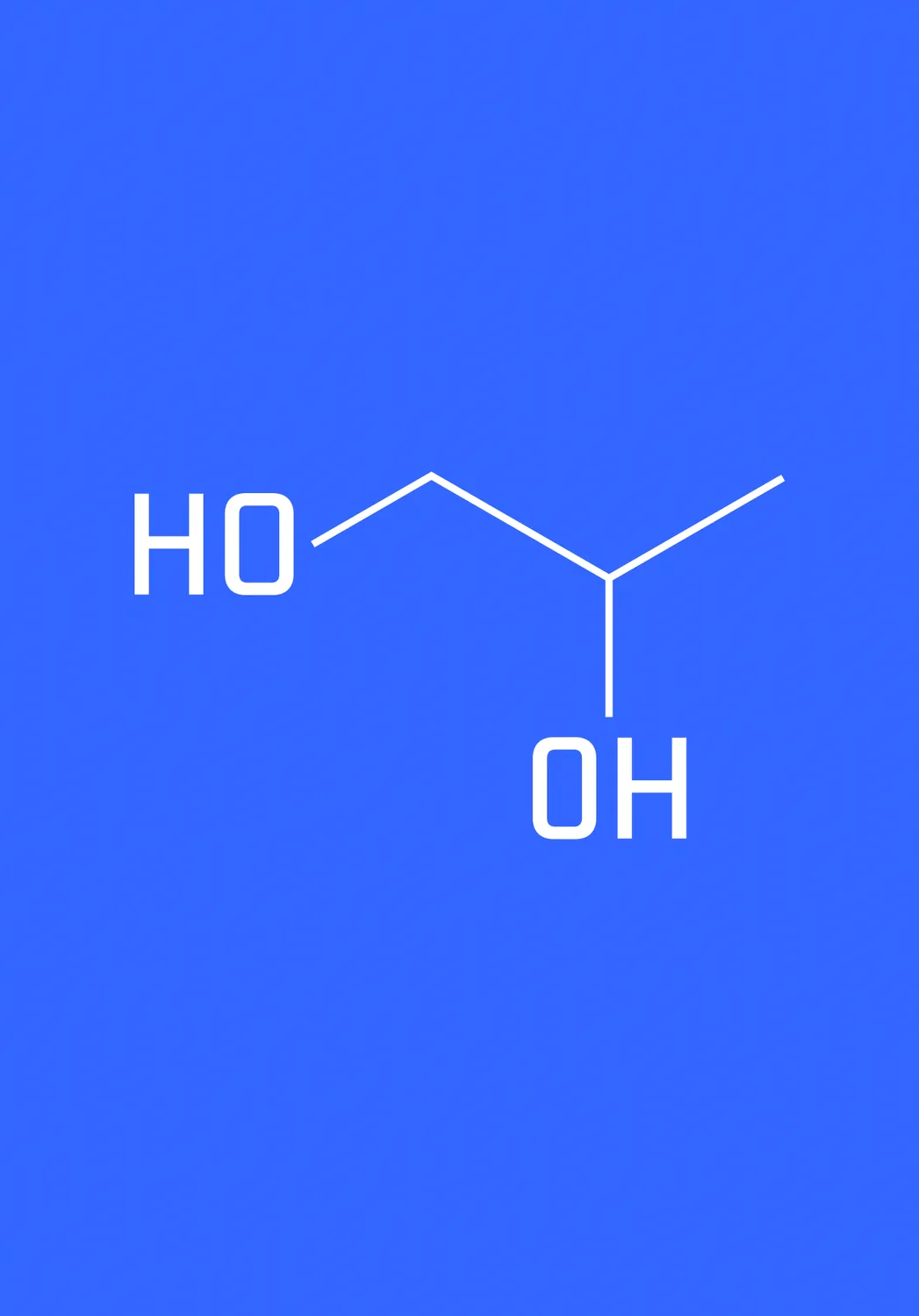
Propylene glycol (PG)

Propylene glycol (PG) is a colorless, odorless, viscous, and non-toxic organic compound. It is widely used across various industrial applications, including cooling systems, heat transfer fluids, antifreeze, and in the production of chemicals and pharmaceuticals. PG is a less toxic alternative to ethylene glycol-based fluids and is often preferred in food- and health-related environments.

Features and Benefits of Propylene Glycol (PG):

  • Safety and low toxicity: PG is non-toxic, making it ideal for sensitive applications such as food, pharmaceutical, and cosmetic systems. It is considered safe in case of accidental skin contact or ingestion in small amounts.
  • Freezing point depression: Like ethylene glycol, PG effectively lowers the freezing point of fluids, providing freeze protection in cooling and antifreeze systems.
  • Boiling point elevation: PG raises the boiling point of water-based fluids.
  • Versatility: Widely used across industries, from industrial cooling systems to cosmetics, pharmaceuticals, and food & beverage manufacturing.

Key applications for Propylene Glycol (PG): Propylene glycol is highly versatile and is used across a wide range of sectors, including the chemical, food, pharmaceutical, and heat transfer fluid industries. Here are some of its main applications:

  • Antifreeze and coolants: Commonly used in antifreeze formulations for automotive cooling, industrial equipment, and heating circuits due to its freeze and heat protection properties.
  • Food & pharmaceutical industry: Used as a solvent, humectant, and stabilizer in the production of food, cosmetics, and medicines (e.g., flavors, colorants, creams, and lotions).
  • Chemicals and solvents: Excellent solvent for paints, inks, and cleaning products.
  • Textiles & industrial applications: Applied in textile production, emulsions, and adhesives.
  • Electronics: Used in electrolytes for capacitors, batteries, and other components.

Thanks to its low toxicity, chemical stability, and compatibility, propylene glycol is a highly versatile heat transfer fluid, offering both safety and efficiency. It is considered a reliable and high-performing alternative to ethylene glycol across industrial, pharmaceutical, and food applications.

Propylene glycol (PG) is a high-performance, reliable, and safer alternative to ethylene glycol in many industrial, pharmaceutical, and food applications.


Read more
Group 257_large_1047x1500_optimized

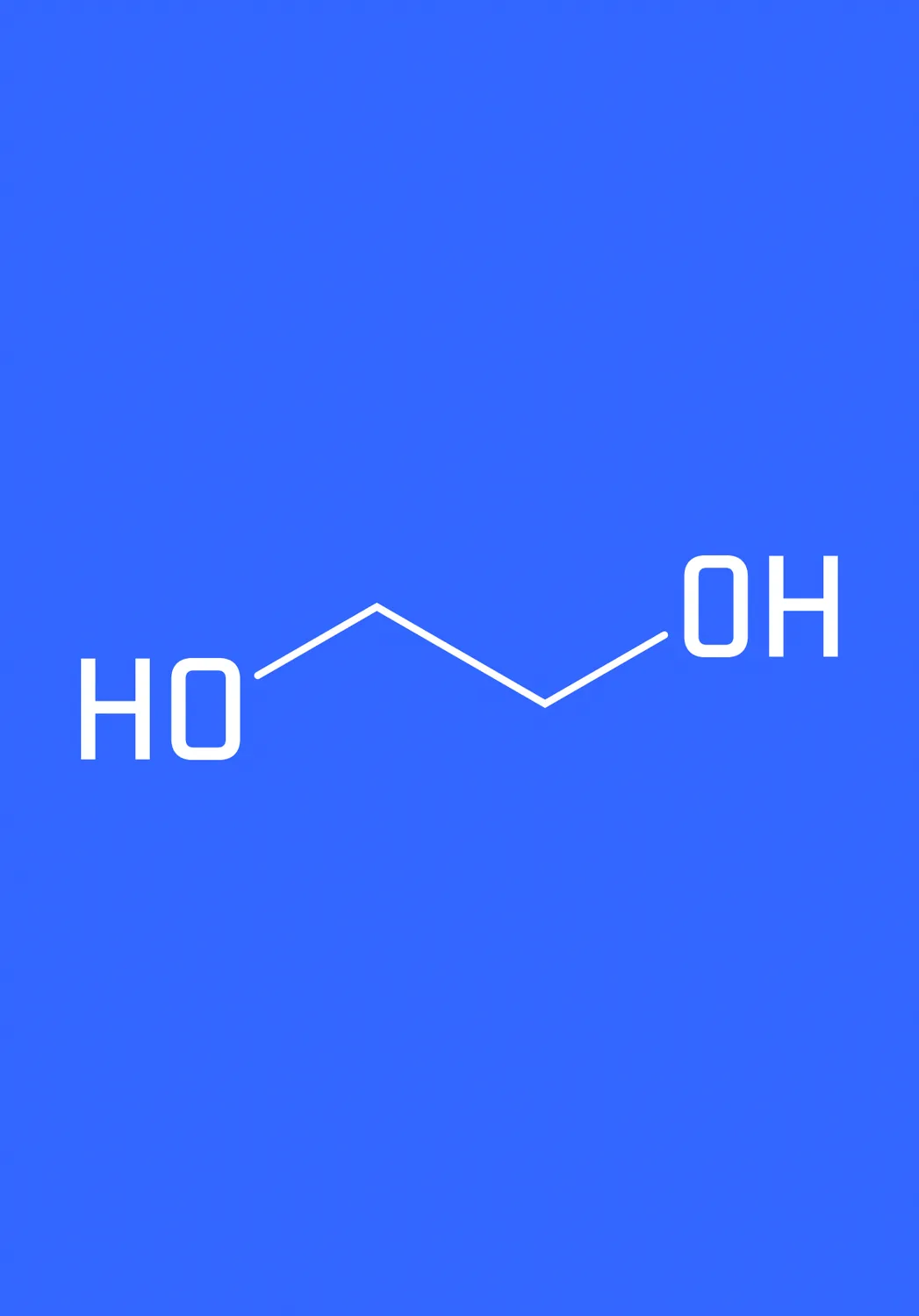
Ethylene glycol

Ethylene glycol (EG), also known as monoethylene glycol (MEG), is a colorless, odorless, hygroscopic liquid widely used in industrial applications. It is particularly important in heat exchanger systems (e.g., arenas), where it acts as a heat transfer fluid. EG lowers freezing points and raises boiling points, allowing systems to maintain optimal temperatures even under extreme conditions, while ensuring energy efficiency and consistent performance.

Features and benefits of MEG :

  • Freezing point depression: Significantly lowers the freezing point of water-based fluids, ensuring effective antifreeze performance under harsh winter conditions.
  • Boiling point elevation: Raises boiling points, enabling systems to operate at higher temperatures without overheating.
  • Biodegradable and eco-friendly: EG has a lower environmental impact than PG, as it is more readily biodegradable and has minimal effects on ecosystems in case of spills.
  • Cost-effectiveness: More economical than PG, EG reduces freezing points more efficiently while maintaining low viscosity, thus requiring less pumping energy.
  • Versatility: Widely used in antifreeze, heat transfer, and chemical processes.
  • Low volatility: Ensures stability under a variety of operating conditions.

Key Applications of EG (MEG):

  • Production of resins and plastics
  • Deicing fluids and heat transfer applications
  • Automotive antifreeze and coolants
  • Water-based paints and adhesives
  • Textile fibers and materials (paper & leather industries)
  • Electronics: Electrolytic capacitors and chemical humectants

Ethylene Glycol (MEG) applications: Ethylene glycol is used as a chemical intermediate in the production of resins and solvents, as well as to lower the freezing point of water, making it an excellent antifreeze agent. It is also a fundamental building block in the production of polyethylene terephthalate (PET), which is used in the manufacturing of plastic bottles and other containers.

  • MEG is also used in the manufacturing of essential products such as:
  • Resins and plastics
  • De-icing fluids and heat transfer fluids
  • Automotive antifreeze and coolants
  • Water-based paints and adhesives
  • Textile fibers and materials for the paper and leather industries

Thanks to its unique properties, ethylene glycol is an essential and versatile heat transfer fluid, delivering high-performance solutions in thermal transfer, cooling, and other industrial sectors. It is also used in industrial applications such as electrolytic capacitors and as a humectant in various chemical processes. Its ability to enhance system efficiency while maintaining stability makes this molecule a preferred choice for applications requiring optimal reliability and performance.

Read more
centre données

Propylene glycol-based heat transfer fluid

Inhibited Propylene Glycol is an enhanced version of propylene glycol designed as a non-toxic and versatile heat transfer fluid. It is formulated with corrosion inhibitors and other additives that provide increased protection against certain types of corrosion and degradation in heat transfer, cooling, and heating systems. This inhibited version of propylene glycol is ideal for applications where reinforced protection against corrosion and deposits is essential, while maintaining the performance benefits and low toxicity of standard propylene glycol.

Features and Benefits of Inhibited Propylene Glycol:

  • Corrosion protection: With the addition of corrosion inhibitors, inhibited propylene glycol protects metals and other materials in cooling and heating circuits from oxidation, extending equipment life and reducing maintenance costs.
  • Deposit and scale reduction: The additives in inhibited propylene glycol reduce the formation of deposits and scale, helping maintain heat transfer efficiency and preserving system integrity over time.
  • Versatility and safety: Inhibited propylene glycol retains the versatile properties of propylene glycol while providing enhanced safety for applications where fluids may come into direct contact with people, animals, or sensitive products.

Key Applications of Inhibited Propylene Glycol:

Inhibited propylene glycol is particularly well-suited for applications where long-term protection against corrosion and deposit formation is required, such as:

  • Cooling systems and antifreeze: Inhibited propylene glycol is used in industrial cooling systems, heating circuits, and automotive antifreeze formulations, where it ensures enhanced protection of pipes and radiators against corrosion.
  • Industrial heating and cooling: Applied in thermal transfer systems in industrial and commercial facilities, inhibited propylene glycol delivers optimal performance while protecting equipment from certain types of corrosion, helping reduce maintenance costs.
  • Food and pharmaceutical industries: Like standard propylene glycol, inhibited propylene glycol is also used in sectors requiring strict safety and purity standards, while providing enhanced protection against fluid degradation.
  • Refrigeration and air conditioning systems: Used in refrigeration circuits to maintain maximum efficiency while minimizing the risks of corrosion and leaks in sensitive systems.

Conclusion

Inhibited propylene glycol offers an enhanced solution compared to standard propylene glycol, combining the benefits of safety and low toxicity with increased protection against corrosion and deposit formation. Ideal for cooling, heating, and industrial applications, it not only ensures optimal thermal performance of systems but also enhances the longevity and reliability of equipment. Thanks to its unique properties, inhibited propylene glycol is a preferred heat transfer fluid for demanding applications in sensitive environments.

Read more
AdobeStock_1099899703

Ethylene glycol-based heat transfer fluid

Inhibited Ethylene Glycol is an enhanced version of standard ethylene glycol, formulated with corrosion inhibitors and other additives to provide reinforced protection against wear and degradation in thermal systems. This formulation is specifically designed to extend equipment lifespan while maintaining optimal performance in industrial, and commercial applications. Inhibited ethylene glycol combines the base fluid’s advantages—such as lowering the freezing point and raising the boiling point—with added protection against corrosion and deposit formation.

Features and Benefits of Inhibited Ethylene Glycol:

  • Enhanced corrosion protection: Inhibited ethylene glycol is formulated with specific corrosion inhibitors that protect metals and other materials in heating and cooling circuits, ensuring longer equipment life and reducing maintenance needs.
  • Deposit prevention: Thanks to the additives in inhibited ethylene glycol, the formation of deposits and scale is minimized, helping maintain optimal heat transfer and preventing blockages in systems.
  • Biodegradability: Like standard ethylene glycol, inhibited EG is biodegradable, making it suitable for use in sensitive environments, including the food, pharmaceutical, and cosmetic industries.
  • Lower freezing point: As with standard ethylene glycol, inhibited ethylene glycol lowers the freezing point of fluids, protecting installations from freezing even at extremely low temperatures.
  • Higher boiling point: Inhibited ethylene glycol raises the boiling point of heat-transfer fluids, allowing engines and systems to operate at higher temperatures, which improves their efficiency.
  • Chemical stability and safety: Inhibited ethylene glycol retains the properties of conventional ethylene glycol, such as its chemical stability, but with increased safety, especially for systems operating at high temperatures and pressures.

Key Applications of Inhibited Ethylene Glycol:
Inhibited ethylene glycol is used where corrosion protection and deposit control are critical, particularly in the following industrial and commercial applications:

  • Industrial cooling systems: Used in large-scale cooling and heating systems, where protecting pipes, heat exchangers, and other metal components from corrosion is essential to ensure reliable long-term operation.
  • Automotive antifreeze formulations: As with standard ethylene glycol, inhibited ethylene glycol is a key component in automotive antifreeze, helping protect engines, radiators, and other equipment from freezing and overheating.
  • Heating and air-conditioning systems: Used in HVAC installations, inhibited ethylene glycol helps maintain optimal performance while protecting circuits from certain types of corrosion and the buildup of deposits.
  • Chemical and pharmaceutical industries: Also used as a heat-transfer fluid in chemical and pharmaceutical processes, where maintaining a stable temperature while ensuring equipment and product safety is crucial.

Conclusion

Inhibited ethylene glycol is an enhanced heat-transfer fluid that combines the standard properties of ethylene glycol with increased protection against corrosion, deposits, and system wear. Ideal for industrial, automotive, and commercial applications, inhibited ethylene glycol delivers optimal thermal performance while ensuring equipment longevity and reliability. Thanks to its advanced protective features, inhibited ethylene glycol is an ideal solution for demanding environments where safety, efficiency, and durability are paramount.

Read more
20250616_1002_Ice Rink Cooling System_remix_01jxwgmv27fvpb5gqd4xzhgb00

Calcium chlorine brine (inhibited)

Calcium chloride–based brine is a soluble salt solution used in various thermal systems as a heat-transfer fluid, especially for applications requiring freeze protection and enhanced thermal performance. When dissolved in water, calcium chloride forms a solution that significantly lowers the freezing point while providing excellent heat-transfer properties. It is widely used in cooling systems, power-generation facilities, and industrial processes that require extremely low temperatures.

Characteristics and Benefits of Calcium Chloride Brine:

  • Significant lowering of the freezing point: Calcium-chloride brine is extremely effective at lowering the freezing point of fluids, making it a preferred choice for applications that must operate well below zero without the risk of freezing, such as cryogenic cooling or de-icing systems.
  • High thermal conductivity: Compared with other salt solutions, calcium chloride offers excellent thermal conductivity, enabling faster and more efficient heat transfer and thus optimizing the performance of thermal systems.
  • Versatility: This heat-transfer fluid is highly versatile and can be used across a wide range of applications, including industrial heating and cooling systems, power-generation processes, and low-temperature refrigeration installations.
  • Safety and low volatility: Calcium-chloride brine is stable and has low volatility, making it ideal for applications where evaporation or fluid loss is undesirable. It is also less corrosive than other salts under certain operating conditions.
  • Durability and low cost: Calcium chloride is relatively economical and competitively priced, making it an attractive solution for facilities that require large volumes of heat-transfer fluid.

Key Applications of Calcium Chloride Brine:

Calcium-chloride–based brine is used in a variety of industrial, commercial, and energy applications, including:

  • Cryogenic cooling systems: Thanks to its ability to depress the freezing point to extremely low temperatures, calcium-chloride brine is ideal for cryogenic cooling in the food, pharmaceutical, and chemical industries.
  • Snow and ice control: Widely used for road and railway de-icing because it lowers the freezing point effectively and rapidly dissolves ice and snow.
  • Power generation & industrial cooling: Often used as a heat-transfer fluid in power plants and high-temperature industrial installations to maintain stable temperatures while optimizing heat transfer.
  • Low-temperature refrigeration: A fluid of choice in ultra-low-temperature refrigeration systems to keep a consistent temperature without the risk of freezing.

Conclusion

Calcium chloride brine is a high-performance heat-transfer fluid, particularly well suited to applications requiring extremely low temperatures. Thanks to its exceptional freezing-point depression and high thermal conductivity, it provides efficient heat transfer while ensuring system safety and durability. Whether for industrial, refrigeration, or snow-removal applications, calcium chloride brine is an economical, reliable solution that delivers optimal thermal performance and increased equipment longevity.

Read more

Chemco Inc. has the solution to your needs!

Contact us for a solution tailored to your needs.

Privacy Overview

This website uses cookies so that we can provide you with the best user experience possible. Cookie information is stored in your browser and performs functions such as recognising you when you return to our website and helping our team to understand which sections of the website you find most interesting and useful. More information on our Policies

Strictly Necessary Cookies

Cette option doit être activée à tout moment afin que nous puissions enregistrer vos préférences pour les réglages de cookie.

Show details Hide details
Analytics

This website uses Google Analytics to collect anonymous information such as the number of visitors to the site, and the most popular pages.

Keeping this cookie enabled helps us to improve our website.